
Perovion TMCH P29-40B is a powder-form organic peroxide containing 39.0–41.0% of 1,1-Di(tert-butylperoxy)-3,3,5-trimethylcyclohexane (TMCH) dispersed on an inert mineral carrier. Upon thermal decomposition, it generates free radicals that drive crosslinking of rubber and polyolefin compounds at processing temperatures above 115°C. Perovion TMCH P29-40B is formulated to provide compounders with a safe, easy-to-disperse solid peroxide that integrates readily into internal mixer and open-mill compounding workflows, offering a practical alternative to liquid organic peroxide systems for rubber vulcanization applications.

Key Features
- Powder Dispersion on Inert Mineral Carrier: Perovion TMCH P29-40B is supplied as a free-flowing white powder in which the active peroxide is uniformly distributed on a mineral carrier system at 39.0–41.0% active content. This format reduces handling hazards associated with neat liquid peroxides and simplifies accurate dosing and weighing during rubber batch preparation and compounding operations.
- Good Scorch Safety at 115°C: The product maintains acceptable scorch safety up to a processing temperature of 115°C, with a rheometer ts2 exceeding 20 minutes under standard test conditions. This processing window helps manufacturers sustain compound quality and production consistency during mixing, calendering, and pre-forming operations without premature crosslinking.
- Bifunctional Crosslinking Efficiency: As a bifunctional peroxide, TMCH generates two reactive radicals per molecule upon thermal decomposition, promoting efficient crosslink network formation within rubber matrices. This leads to vulcanizates with well-balanced mechanical properties, including improved tensile strength, compression set resistance, and heat aging performance compared to monofunctional peroxides.
- Broad Polymer Substrate Compatibility: Perovion TMCH P29-40B is suitable for crosslinking a range of polymers including EPDM, HNBR, POE, natural rubber, and other synthetic rubber types, as well as thermoplastic polyolefins. This versatility allows formulators to rationalize their peroxide inventory and apply a single crosslinking agent across multiple compound recipes and application segments.
- Wire and Cable Application Suitability: The product is recognized for use in wire and cable insulation and jacketing compounds, where consistent crosslink density and retention of electrical properties over service life are required. Its solid powder form supports clean, dust-controlled mixing practices and is compatible with the handling requirements of cable manufacturing environments.
Typical Applications
Perovion TMCH P29-40B functions as a crosslinking agent in rubber compounding, where thermal activation at temperatures around 145°C — corresponding to a rheometer t90 of approximately 12 minutes — produces vulcanizates with controlled and reproducible crosslink network density. The peroxide crosslinking mechanism avoids sulfur-related discoloration, blooming, and off-gassing associated with conventional sulfur vulcanization systems, making it well-suited for rubber articles that require color stability, low compression set, and resistance to long-term heat aging in service conditions up to 150°C and above.
End-use applications include EPDM and HNBR sealing compounds, gaskets, and molded rubber parts for automotive cooling, fuel, and HVAC systems; polyolefin elastomer (POE) crosslinking for flexible foam, film, and sheet applications; wire and cable insulation and semiconductor screening compounds; and heat-resistant industrial rubber articles such as hoses, vibration dampers, and roll coverings. The powder form is also compatible with continuous mixing processes and automated gravimetric dosing systems used in high-volume rubber manufacturing operations.
Technical Specifications
- Chemical Type: 1,1-Di(tert-butylperoxy)-3,3,5-trimethylcyclohexane (TMCH)
- Appearance: White to off-white free-flowing powder
- Active Content: 39.0–41.0%
- Total Active Oxygen: 4.13–4.34%
- Density at 20°C: bulk density typically 0.5-0.7 g/cm³ for calcium carbonate/silica-carried peroxide powders (particle density varies by batch; consult certificate of analysis for exact value)
- Viscosity at 20°C: N/A — solid powder form
- Water Content: ≤0.5% by mass, typical specification for powder-form organic peroxide formulations to prevent caking and maintain free-flow properties
Thermal Stability
- Organic peroxides are thermally unstable substances and must be handled with appropriate care.
- SADT: 60°C
Storage Recommendations
- Recommended maximum storage temperature: 30°C
- Store in a dry, well-ventilated area away from heat sources and direct sunlight.
- Keep containers tightly closed.
- Avoid contact with reducing agents, acids, alkalis, and heavy metal compounds.
Packaging & Transport
- Standard Packaging: 20 kg net cardboard boxes (standard regions); 50 lb (22.7 kg) net non-returnable poly-lined cartons (North America)
- Net Weight: 20 kg per carton (standard regions) / 50 lb per carton (North America)
- UN Number: UN 3110
- Transport Class: Organic peroxide type F, solid; Class 5.2
Perovion TMCH P29-40B: Safety & Handling
Perovion TMCH P29-40B should be handled in accordance with applicable safety procedures for organic peroxides. Users are advised to review the Safety Data Sheet prior to handling and to implement appropriate personal protective equipment and engineering controls as specified therein.
Safety Data Sheet and destination-compliant labeling information are available upon request. For related products, see also Perovion TMCH L29 and Perovion DCP PBC.
Choosing Between Powder and Paste TMCH Grades
Perovion TMCH P29-40B is one of two common physical forms in which 1,1-Di(tert-butylperoxy)-3,3,5-trimethylcyclohexane is supplied to rubber and polyolefin compounders. The powder-on-carrier format benchmarked here — corresponding to industry-standard grades such as Trigonox 29-40B-pd, 40% active on a calcium carbonate and silica carrier — suits internal mixers and batch-off lines that are already set up for solid additive dosing, and avoids the plasticizer carry-over that a paste-form peroxide can introduce into a compound recipe. For compounders working with pre-dispersed liquid handling systems or automated paste-metering equipment, see also Perovion TMCH P29-40D, the paste-on-carrier grade of the same active peroxide.
Both grades deliver the same 39.0-41.0% active TMCH content and the same crosslinking chemistry; the choice between them is primarily a function of existing plant dosing equipment, dust-control requirements, and compound formulation constraints around carrier compatibility rather than a difference in cure performance.
Thermal Decomposition and Byproduct Considerations
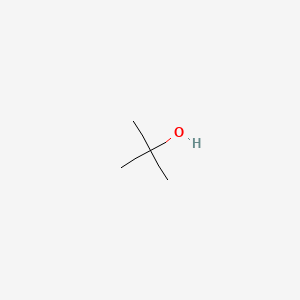
Like all bifunctional dialkyl peroxides, Perovion TMCH P29-40B decomposes thermally through a homolytic cleavage of its peroxide bonds, generating alkoxy radicals that abstract hydrogen from polymer chains to initiate crosslinking. The major byproducts formed during this decomposition include methane, acetone, tert-butanol, 3,3,5-trimethylcyclohexane, 3,3,5-trimethylhexanoic acid, and small amounts of poly(3,3,5-trimethyl ε-caprolactone). Compounders working in food-contact, potable water, or wire and cable applications with strict volatile organic compound (VOC) and taste-and-odor requirements should factor these decomposition products into post-cure devolatilization and outgassing evaluations, particularly for thick cross-sections or enclosed cable jacketing processes where residual byproduct retention is more difficult to manage than in open-mill sheet processing.
Because Perovion TMCH P29-40B is bifunctional, it generates two reactive sites per peroxide molecule, giving compounders more crosslink density per unit weight of peroxide compared to monofunctional peroxide systems at equivalent active oxygen loading. This efficiency is a key reason bifunctional TMCH-type peroxides remain a preferred choice for demanding polyolefin and rubber crosslinking applications despite the availability of lower-cost monofunctional alternatives.
Carrier System and Dust-Handling Characteristics
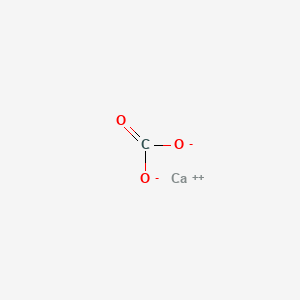
The calcium carbonate and silica carrier system in Perovion TMCH P29-40B serves several functional purposes beyond simple dilution of the active peroxide. The inert mineral matrix physically separates individual peroxide particles, reducing the risk of localized heat buildup during storage and handling, and it improves the free-flow and anti-caking behavior of the powder relative to unsupported peroxide crystals. Because the active peroxide is bound to a mineral carrier rather than suspended in a liquid plasticizer, dust generation during scooping, weighing, and charging into internal mixers is generally lower than with comparable neat crystalline peroxides, which supports cleaner housekeeping practices in rubber compounding facilities that must control airborne peroxide exposure.