
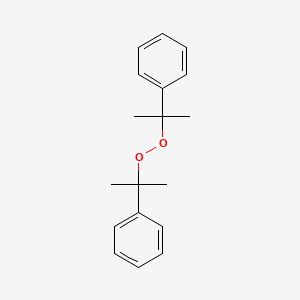
Perovion DCP PBC is a high-purity dicumyl peroxide (DCP) organic peroxide in fine flake form, used as a crosslinking and vulcanization agent for polyolefins, elastomers, and silicone rubbers. It delivers reliable crosslink density and thermal processing flexibility across a broad range of polymer systems.
Key Features
- High Active Content: Perovion DCP PBC is formulated at high purity in fine flake form, delivering consistent peroxide activity per batch. This uniformity supports reproducible crosslink density in demanding polymer processing operations.
- Broad Polymer Compatibility: Compatible with a wide range of substrates including LDPE, HDPE, LLDPE, EVA, EPDM, EPR, silicone rubber, and natural rubber. This versatility makes it suitable for multi-substrate compounding lines without reformulation.
- Thermal Processing Stability: DCP’s half-life profile allows for processing at compounding temperatures while ensuring efficient decomposition during vulcanization or crosslinking. This characteristic supports efficient production in both continuous and batch processes.
- Solid Flake Form for Precision Handling: The fine flake form facilitates accurate weighing and dispersion into polymer matrices while minimizing dust generation versus fine powder grades. This improves handling convenience and dosing precision on the production floor.
- Sulfur-Free Crosslinking: As a peroxide-based crosslinker, Perovion DCP PBC produces sulfur-free crosslinks, which are preferred in electrical insulation and food-contact applications requiring clean, odor-reduced vulcanizates. This property is particularly valued in wire and cable insulation compounds.
Typical Applications
Perovion DCP PBC functions through free-radical crosslinking initiated by thermal decomposition of the peroxide bond. During processing, the generated cumyloxy radicals abstract hydrogen atoms from polymer chains, forming macroradicals that combine to create C–C crosslinks. This mechanism applies across both saturated and unsaturated polymer systems, yielding crosslinked networks with improved heat resistance, mechanical strength, and dimensional stability compared to uncrosslinked counterparts.
Primary application areas include crosslinked polyethylene (PEX) pipe systems for hot and cold water supply and underfloor heating, wire and cable insulation for medium- and low-voltage applications, silicone rubber molded and extruded parts, EPDM and EPR sealing strips and automotive rubber profiles, polyolefin foam sheets, and general-purpose rubber goods including belts, hoses, and gaskets requiring improved heat aging performance.
Technical Specifications
- Chemical Type: Dicumyl peroxide (DCP)
- CAS No.: 80-43-3
- Appearance: White crystalline powder / fine flakes
- Active Content: ≥99.0%
- Active Oxygen: 5.86% min. (theoretical maximum 5.92%)
- Density at 20°C: 1.026 g/cm³
- Viscosity at 20°C: N/A — solid form
- Water Content: ≤0.2% by mass, typical specification for high-purity crystalline organic peroxide formulations
Thermal Stability
- Organic peroxides are thermally unstable substances and must be handled with appropriate care.
- SADT: 75°C (167°F)
Storage Recommendations
- Recommended maximum storage temperature: 30°C (86°F)
- Store in a dry, well-ventilated area away from heat sources and direct sunlight.
- Keep containers tightly closed.
- Avoid contact with reducing agents, acids, alkalis, and heavy metal compounds.
Packaging & Transport
- Standard Packaging: non-returnable cartons of 5 x 5 kg (standard regions); non-returnable cartons of 55.1 lb net (North America)
- Net Weight: 25 kg
- UN Number: UN 3110
- Transport Class: Organic peroxide type F, solid; Division/Class 5.2
Perovion DCP PBC: Safety & Handling
Perovion DCP PBC should be handled in accordance with applicable safety procedures for organic peroxides. Users are advised to review the Safety Data Sheet prior to handling and to implement appropriate personal protective equipment and engineering controls as specified therein.
Safety Data Sheet and destination-compliant labeling information are available upon request. For related products, see also Perovion CHP L80 and Perovion BCHPC P16.
Reactivity and Decomposition Profile
Perovion DCP PBC’s decomposition kinetics follow standard first-order Arrhenius behavior, with a half-life of approximately 10 hours at 112°C, 1 hour at 132°C, and 0.1 hour at 154°C in dilute chlorobenzene solution. These half-life figures give formulators a practical basis for setting safe processing temperatures and target cure schedules without relying on trial-and-error compound testing.
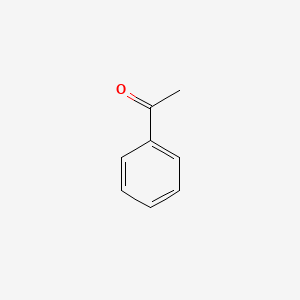
Upon thermal decomposition, Perovion DCP PBC generates methane, acetophenone, and 2-phenylisopropanol as major byproducts. As a monofunctional peroxide, each DCP molecule generates one primary radical pair per decomposition event, giving formulators a well-characterized, moderate crosslinking efficiency that is easy to dose accurately across a wide range of substrate types, from silicone rubber to crosslinked polyethylene pipe compounds.