
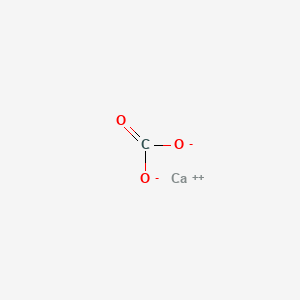
Perovion DHBP P10-45B is a powder-form organic peroxide containing 45% of 2,5-Dimethyl-2,5-di(tert-butylperoxy)hexane (DHBP) dispersed on a calcium carbonate (CaCO3) carrier for ease of dispersion and controlled dusting. As a bifunctional dialkyl peroxide with excellent scorch safety up to 135°C, Perovion DHBP P10-45B is used for crosslinking natural and synthetic rubbers including EPDM, FKM, HNBR, and silicone rubber, as well as thermoplastic polyolefins and polyolefin elastomers. The CaCO3 carrier ensures uniform blending into elastomer compounds while minimizing dust generation during mixing operations.

Key Features
- 45% DHBP on Calcium Carbonate Carrier: Perovion DHBP P10-45B delivers 45% of the active peroxide on an inorganic CaCO3 carrier, offering a balance between active content and handling safety. The mineral carrier promotes uniform dispersion throughout elastomer matrices, reducing the risk of localized over-cure and enabling consistent crosslink density across the compound batch.
- Controlled Dusting for Safe Powder Handling: The CaCO3-based powder formulation is specifically designed for controlled dusting during weighing, blending, and transfer operations. This characteristic reduces airborne particle exposure in the compounding environment compared to unformulated powders, and the product integrates cleanly into open-mill and internal mixer workflows without agglomeration.
- Excellent Scorch Safety up to 135°C: Rubber compounds containing Perovion DHBP P10-45B exhibit excellent scorch safety, with a rheometer ts2 exceeding 20 minutes at 135°C under standard test conditions. This processing stability allows mixing, calendering, and extrusion operations to proceed at elevated temperatures without premature cure, maintaining compound flowability and process reproducibility throughout the manufacturing sequence.
- Broad Rubber and Polyolefin Substrate Compatibility: Perovion DHBP P10-45B is effective for crosslinking a wide range of substrates: EPDM, FKM, HNBR, silicone rubber, POE, and specialty elastomers, as well as thermoplastic polyolefins. This versatility allows rubber compounders and polymer processors to use a single crosslinking agent across multiple product lines and compound formulations, simplifying inventory management.
- Bifunctional DHBP for Efficient Crosslink Network Formation: As a bifunctional peroxide, DHBP generates two reactive radical sites per molecule upon thermal decomposition, promoting the formation of dense and well-distributed crosslink networks in rubber matrices. Vulcanizates produced with Perovion DHBP P10-45B exhibit good compression set resistance, heat aging stability, and long-term mechanical property retention suitable for demanding service conditions.
Typical Applications
Perovion DHBP P10-45B is incorporated into rubber compounds during open-mill or internal mixer processing, where the CaCO3 carrier supports uniform distribution of the active peroxide throughout the elastomer matrix. Upon cure, the DHBP radical mechanism produces thermally stable vulcanizates with controlled crosslink density and minimal reversion, making it well-suited for rubber articles that require consistent mechanical performance after repeated thermal cycling or extended service at elevated temperatures. The peroxide crosslinking route avoids sulfur-related discoloration and blooming, which is advantageous for colored, transparent, or odor-sensitive compound systems.
End-use applications include EPDM weatherstripping, roofing membranes, and automotive sealing systems; FKM and HNBR seals and O-rings for oil, fuel, and chemical resistance applications; silicone rubber profiles, tubing, and molded components for high-temperature service; POE foam and crosslinked polyolefin sheet for insulation and packaging; and specialty elastomer articles for industrial, automotive, and construction markets where sulfur-free vulcanization is required. Perovion DHBP P10-45B is also suitable for thermoplastic polyolefin crosslinking in wire and cable, pipe, and film applications.
Technical Specifications
- Chemical Type: 2,5-Dimethyl-2,5-di(tert-butylperoxy)hexane (DHBP) on CaCO3
- Appearance: White to off-white free-flowing powder
- Active Content: 45%
- Total Active Oxygen: 4.84–5.06%
- Density at 20°C: 1.50 g/cm³ (true particle density); bulk density 510 kg/m³ (0.51 g/cm³)
- Viscosity at 20°C: N/A — solid powder form
- Water Content: ≤0.5% by mass, typical specification for powder-form organic peroxide formulations to prevent caking and maintain free-flow properties
Thermal Stability
- Organic peroxides are thermally unstable substances and must be handled with appropriate care.
- SADT: 80°C (176°F)
Storage Recommendations
- Recommended maximum storage temperature: 30°C
- Store in a dry, well-ventilated area away from heat sources and direct sunlight.
- Keep containers tightly closed.
- Avoid contact with reducing agents, acids, alkalis, and heavy metal compounds.
Packaging & Transport
- Standard Packaging: non-returnable poly-lined cartons, 50 lb (22.7 kg) net weight
- Net Weight: 50 lb (22.7 kg) per carton
- UN Number: UN 3108
- Transport Class: Organic peroxide type E, solid; Division/Class 5.2
Perovion DHBP P10-45B: Safety & Handling
Perovion DHBP P10-45B should be handled in accordance with applicable safety procedures for organic peroxides. Users are advised to review the Safety Data Sheet prior to handling and to implement appropriate personal protective equipment and engineering controls as specified therein.
Safety Data Sheet and destination-compliant labeling information are available upon request. For related products, see also Perovion TMCH L29 and Perovion DCP PBC.
Choosing Between 45% and 50% Active DHBP Powder Grades
Perovion DHBP P10-45B sits alongside Perovion DHBP P10-50D as one of two common active-content powder grades of DHBP available to rubber and polyolefin compounders. Both are carried on inert mineral fillers for controlled dusting and dosing convenience, but they differ in active peroxide loading and, depending on supplier, carrier composition.
The 45% CaCO3-carried grade benchmarked here provides a lower per-unit-weight peroxide loading than the 50% grade, which can simplify accurate low-dose weighing in compounds that require only modest crosslink density, while the higher-concentration grade reduces total masterbatch mass needed in the recipe. Compounders should select between the two primarily based on target crosslink density, existing dosing equipment calibration, and compatibility of the specific mineral carrier with the base polymer system.
Upon thermal decomposition, Perovion DHBP P10-45B generates methane, ethane, acetone, tert-butanol, and tert-amyl alcohol as major byproducts. Compounders working in food-contact, potable water, or enclosed cable jacketing applications with strict volatile organic compound (VOC) and taste-and-odor requirements should factor these decomposition products into post-cure devolatilization planning, particularly for thick cross-sections where residual byproduct retention is harder to manage than in open-mill sheet processing.

Bulk Density and Dosing Volume Considerations
The distinction between bulk density and true particle density matters for compounders setting up volumetric dosing equipment for Perovion DHBP P10-45B.
The bulk density of approximately 510 kg/m³ (0.51 g/cm³) reflects the loosely packed powder as it sits in a hopper or scoop, including the air space between particles, while the true particle density of 1.50 g/cm³ reflects the solid CaCO3-peroxide composite itself with no air gaps.
Volumetric feeders calibrated against the wrong density figure will under- or over-dose the peroxide relative to the intended weight-based recipe, so compounders switching from gravimetric to volumetric dosing, or commissioning new feed equipment, should confirm which density value their system references before running production batches.