
Epovion BPA-L 17 is a standard, undiluted liquid bisphenol-A diglycidyl ether epoxy resin produced from bisphenol-A and epichlorohydrin, valued for the excellent mechanical strength, chemical resistance, and heat resistance it delivers after curing. It is considered a standard-grade epoxy resin suitable for general industrial epoxy applications.
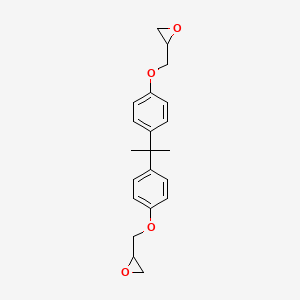
Epovion BPA-L 17 Overview
Epovion BPA-L 17 belongs to the family of standard bisphenol-A liquid epoxy resins, the most widely used class of epoxy resin across coatings, composites, and adhesive applications. Produced by the reaction of bisphenol-A with epichlorohydrin, the resin offers a well-balanced combination of epoxide equivalent weight, viscosity, and reactivity that makes it compatible with a broad range of amine, polyamide, and anhydride curing agents.
Because the resin is supplied undiluted, it retains high purity and consistent reactivity, providing formulators with a dependable base resin for building out coating, composite, and adhesive systems from a known starting point.
Key Features
- Standard bisphenol-A chemistry: Epovion BPA-L 17 is a diglycidyl ether of bisphenol-A (DGEBA) produced from bisphenol-A and epichlorohydrin.
- High purity, undiluted grade: The resin is supplied without diluents, preserving reactivity and cured performance.
- Broad curing agent compatibility: Epovion BPA-L 17 is suitable for polyamine and polyamide curing systems.
- Excellent mechanical strength: Cured films and castings deliver strong mechanical performance.
- Good chemical and heat resistance: The resin provides good chemical resistance along with excellent heat resistance once cured.
Typical Applications
Epovion BPA-L 17 is primarily used in laminates and filament winding, where its balanced viscosity and reactivity support consistent fiber wet-out and mechanical performance in composite structures. It is also widely applied in encapsulation, where it provides electrical insulation and protection for electronic components.
Beyond composites and encapsulation, the resin is suitable for civil engineering formulations, tooling, coatings, and adhesive systems, where its standard reactivity profile and broad curing agent compatibility make it a dependable general-purpose choice. For applications requiring lower viscosity and higher flow, formulators may wish to evaluate Epovion BPF-L 17 alongside this grade.
Technical Specifications
- Chemical composition: Bisphenol-A diglycidyl ether
- Physical state: Liquid
- Epoxide equivalent weight: 184-190 g/eq
- Color (Gardner): 1.0 max
- Flash point: 150°C minimum
- Viscosity (25°C): 12,000-15,000 cps
- Hydrolyzable chlorine content: 1,000 ppm maximum
- Density (25°C): 1.16 g/cm³
- Function: Standard-grade epoxy resin base for general industrial applications
Standard DGEBA Chemistry & Composite Performance
As a standard DGEBA resin, Epovion BPA-L 17 sits in the epoxide equivalent weight range of 184-190 g/eq that defines conventional liquid bisphenol-A epoxy resin, giving it the reactivity and crosslink density needed to deliver strong mechanical properties and heat resistance once cured with an appropriate hardener. The controlled hydrolyzable chlorine content of 1,000 ppm maximum supports consistent cure behavior and helps limit unwanted side reactions during processing, which is particularly relevant in electrical encapsulation and other applications where purity affects long-term performance.
In laminate and filament winding applications, the resin’s viscosity of 12,000-15,000 cps at 25°C balances easy fiber impregnation against resin drainage, supporting uniform resin distribution through glass or carbon fiber reinforcement. Formulators working in cooler climates should note that the resin may crystallize at low storage temperatures; gentle warming to 50-60°C with stirring restores the resin to its normal liquid state without affecting performance.
Storage Recommendations
- Store in the original, tightly sealed container, protected from moisture.
- Recommended storage: room temperature, away from direct sunlight and heat sources.
- Shelf life: Up to 12 months in the original, unopened packaging when stored under recommended conditions.
- If crystallization occurs during storage, warm to 50-60°C with stirring to restore the resin to normal liquid form.
Documentation & Compliance
Each shipment of the product is supported by standard quality and compliance documentation to help customers manage incoming inspection, formulation approval, and downstream regulatory reporting.
- Certificate of Analysis (COA): Provided per batch
- Safety Data Sheet (SDS): Mandatory prior to handling
- Labels: Prepared in accordance with applicable regulations
- Industrial and professional use only
Formulation Guidance
Epovion BPA-L 17 is typically cured with polyamine or polyamide hardeners at a stoichiometric ratio based on the resin’s epoxide equivalent weight of 184-190 g/eq, with the specific hardener selected according to the pot life, cure temperature, and mechanical property targets of the application. In laminate and filament winding processes, resin viscosity can be adjusted with a compatible reactive diluent if faster fiber wet-out is required.
For applications requiring lower viscosity without dilution, such as crack injection, self-leveling flooring, or fine-detail casting, formulators may wish to evaluate Epovion BPF-L 17, a bisphenol-F grade offering higher flow than this standard bisphenol-A resin.
Packaging & Logistics
- Packaging: Approved industrial packaging (240 kg drums standard)
- MOQ: Subject to packaging configuration
- Lead time: Indicative lead time, to be confirmed upon order acceptance
- Incoterms: Quoted case by case
Epovion BPA-L 17: Safety & Handling
Epovion BPA-L 17 should be handled in accordance with standard industrial hygiene practices for liquid epoxy resins. Users are advised to review the Safety Data Sheet prior to handling and to implement appropriate personal protective equipment and engineering controls as specified therein, since uncured epoxy resins can cause skin and eye irritation and sensitization with repeated contact. As with all epoxy resins, small-scale compatibility and cure trials are recommended before full-batch formulation to confirm viscosity, cure profile, and mechanical properties in the target system.
Safety Data Sheet and destination-compliant labeling information for the product are available upon request. For related epoxy resin options, see also Epovion BPF-L 17 and Epovion SOL-S 90.