
Addivion SURF 43 is a liquid rheology additive based on a solution of a high molecular weight, urea-modified, medium-polarity polyamide, formulated to improve the anti-sagging and anti-settling properties of solvent-borne coatings, adhesives, and sealants. With the aid of pigments and fillers, the additive generates a three-dimensional network structure whose entanglement produces pronounced pseudoplastic flow behavior.
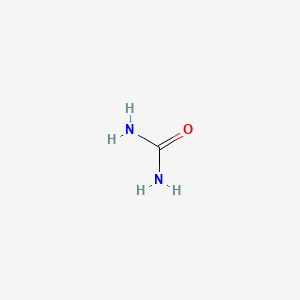
Addivion SURF 43 Overview
Addivion SURF 43 belongs to the family of urea-modified polyamide rheology additives, in which a high molecular weight polymer network forms with the assistance of the pigments and fillers already present in the formulation. The entanglement of these polymer chains is what produces the pseudoplastic flow behavior that defines the product’s performance, while the polarity of the host system and the incorporation temperature both strongly influence the final rheological effectiveness.
Because settling of pigments and fillers is prevented and viscosity rebounds rapidly after shearing, the additive delivers outstanding anti-sagging properties without introducing a false body effect or interfering with intercoat adhesion, and its liquid form makes it straightforward to process.
Key Features
- Urea-modified polyamide chemistry: Addivion SURF 43 is built on a solution of a high molecular weight, urea-modified, medium-polarity polyamide.
- Pseudoplastic flow behavior: The additive generates a three-dimensional network structure that produces pronounced pseudoplastic flow.
- Rapid viscosity rebound: Outstanding anti-sagging performance results from the rapid rebound in viscosity after shearing.
- No false body effect: The additive avoids false body effects and does not negatively influence intercoat adhesion.
- Easy processing: Its liquid form makes Addivion SURF 43 straightforward to incorporate and handle.
Typical Applications
Addivion SURF 43 is primarily used as a sag and settling control additive in industrial and protective coatings, where it maintains pigment and filler distribution while preserving good application properties. It is also effective in adhesives and sealants based on solvent-borne, medium-polarity systems, where anti-sag performance is critical to maintaining bond line thickness on vertical or overhead surfaces.
Beyond coatings and adhesives, the additive is suitable for detergents, cleaning, and care products based on medium-polarity solvents, where its thixotropic network prevents encapsulated fragrances and other particles from settling without affecting residual container emptying. For complementary pigment wetting and dispersion to offset the viscosity increase that can accompany rheology modification, formulators often evaluate Addivion DISP 00 alongside this grade.
Technical Specifications
- Composition: Solution of a high molecular weight, urea-modified, medium-polarity polyamide
- Density (20°C): 0.86 g/ml
- Non-volatile matter (10 min, 150°C): 29%
- Solvents: Isobutanol/solvent naphtha 9/1
- Flash point: 27°C
- Refractive index (20°C): 1.43
- Function: Liquid rheology additive for anti-sagging and anti-settling control
Urea-Modified Polyamide Rheology Chemistry & Network Formation
Urea-modified polyamide rheology additives such as Addivion SURF 43 build their network structure with the direct participation of pigments and fillers already in the formulation, distinguishing them from clay or pure urea-crystal thixotropes that build structure independently of the solid phase. The entanglement of the high molecular weight polymer chains around these particles is what generates pseudoplastic flow, meaning viscosity drops under shear during application and rebounds quickly once shear is removed, which is precisely the behavior needed to combine easy application with strong anti-sag performance.
Formulators should note that because the additive interacts directly with pigments and fillers, this interaction can sometimes lead to a viscosity increase and gloss reduction; this effect can be minimized by ensuring the solid particles are already well stabilized through the use of an effective wetting and dispersing additive before the rheology additive is introduced. Gelling, separation, or turbidity may also occur if the product is exposed to temperatures below 10°C during storage or transport, though effectiveness is unaffected if incorporation takes place under dispersion conditions at 50°C or higher.
Storage Recommendations
- Store in the original, tightly sealed container, protected from moisture and temperatures below 10°C.
- Recommended storage temperature: 10-30°C.
- Gelling, separation, or turbidity may occur below 10°C; effectiveness is restored by incorporating under dispersion conditions at 50°C or above.
- Shelf life: Up to 18 months in the original, unopened packaging when stored under recommended conditions.
Documentation & Compliance
Each shipment of the product is supported by standard quality and compliance documentation to help customers manage incoming inspection, formulation approval, and downstream regulatory reporting.
- Certificate of Analysis (COA): Provided per batch
- Safety Data Sheet (SDS): Mandatory prior to handling
- Labels: Prepared in accordance with applicable regulations
- Industrial and professional use only
Formulation Guidance
Recommended addition levels in coatings, adhesives, and sealants are 0.1-1.5% of total formulation to improve anti-settling properties and 1-3% to increase overall stability. For detergents, cleaning, and care products, 0.3-3.0% based on total formulation is recommended depending on the properties to be achieved. These levels serve as a starting point, with optimal dosage determined through application-related test series for the target system.
Optimum results are achieved when the additive is incorporated into the millbase while dispersing pigments and fillers, with a typical temperature increase to 40-50°C during this phase having a favorable effect. Post-addition under normal stirring at low shear is also possible, provided the binder system has suitable polarity and the additive is never exposed to temperatures below 10°C. For a closely related urea-based rheology additive optimized for different application areas, formulators may wish to evaluate Addivion SURF 41.
Packaging & Logistics
- Packaging: Approved industrial packaging
- MOQ: Subject to packaging configuration
- Lead time: Indicative lead time, to be confirmed upon order acceptance
- Incoterms: Quoted case by case
Addivion SURF 43: Safety & Handling
Addivion SURF 43 should be handled in accordance with standard industrial hygiene practices for coating and resin additives. Users are advised to review the Safety Data Sheet prior to handling and to implement appropriate personal protective equipment and engineering controls as specified therein. As with all rheology additives, small-scale compatibility and dosage trials are recommended before full-batch formulation to confirm anti-sagging performance and to check for any effect on gloss, viscosity, or storage stability in the target system.
Safety Data Sheet and destination-compliant labeling information for the product are available upon request. For related additive options, see also Addivion SURF 41 and Addivion DISP 00.