
Addivion DEF 90 is a solvent-free wetting and dispersing additive built on an alkylammonium salt of a high molecular-weight copolymer, formulated for solvent-borne and solvent-free coatings, adhesives, PVC plastisols, ambient-curing resin systems, and the production of color masterbatches for thermoplastics. It is particularly recommended for stabilizing acidic and neutral carbon black pigments, and also prevents phase separation and improves fiber wetting in SMC/BMC formulations.
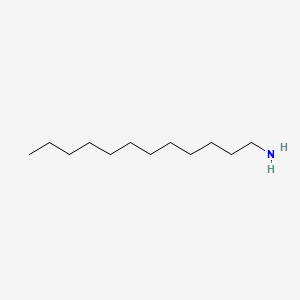
Addivion DEF 90 Overview
Addivion DEF 90 belongs to the family of steric stabilization wetting and dispersing additives, in which an alkylammonium salt of a high molecular-weight copolymer deflocculates pigment particles and generates a uniform electrical charge across their surface. The resulting combination of electrostatic repulsion and steric stabilization prevents coflocculation, which is the underlying cause of non-floating coloring defects in pigment blends.
Because the deflocculated pigment particles remain smaller and more evenly distributed, formulations built with the additive typically show higher gloss, improved color strength, greater transparency in transparent pigments, and improved hiding power in opaque systems, all while operating at reduced viscosity.
Key Features
- Alkylammonium salt chemistry: Addivion DEF 90 is a solvent-free wetting and dispersing additive built on an alkylammonium salt of a high molecular-weight copolymer.
- Steric stabilization for pigment deflocculation: The additive deflocculates pigments through steric stabilization and a uniform electrical charge, preventing coflocculation.
- Particularly effective for carbon black pigments: The additive is especially recommended for stabilizing acidic and neutral carbon black pigments.
- Plasticizer-free formulation: Addivion DEF 90 does not contain plasticizers, supporting formulations with strict compositional requirements.
- Reduces viscosity and improves flow: Deflocculation lowers millbase viscosity and improves flow characteristics, allowing higher pigment loading.
Typical Applications
Addivion DEF 90 is primarily used as a dispersing additive in solvent-borne and solvent-free coatings, adhesives, and PVC plastisols, with a key application area in solvent-free pigment concentrates for these systems. It is also recommended for SMC and pultrusion formulations, where it prevents phase separation in unsaturated polyester systems with differing thermoplastics and improves the wetting of carbon fibers.
In thermoplastic compounding, the additive significantly reduces millbase viscosity and brings about Newtonian flow characteristics, improving torque build-up, throughput, and dispersion quality in color masterbatches based on PE, PP, ABS, PVC, PET, and PA. For complementary filler wetting in the same SMC/BMC and pultrusion systems, formulators often evaluate Addivion DEF 90A alongside this grade.
Technical Specifications
- Composition: Alkylammonium salt of a high molecular-weight copolymer
- Amine value: 44 mg KOH/g
- Acid value: 38 mg KOH/g
- Density (20°C): 1.05 g/ml
- Special note: Does not contain plasticizers
- Function: Steric stabilization wetting and dispersing additive for carbon black and other pigments
Steric Stabilization Mechanism for Carbon Black Dispersion
Steric stabilization dispersants such as Addivion DEF 90 work by adsorbing onto the pigment surface through their alkylammonium anchoring groups while the remainder of the copolymer chain extends into the surrounding resin, creating a physical barrier that keeps particles apart. Combined with the uniform electrical charge the additive imparts to the pigment surface, this dual mechanism is especially effective for notoriously difficult-to-disperse pigments such as acidic and neutral carbon blacks, which are prone to reagglomeration without an effective stabilizing additive.
Because coflocculation between different pigment types is prevented, pigment blends maintain consistent color development and avoid the floating and non-uniform tinting that can otherwise occur when pigments of different chemistry are combined in the same formulation. This same mechanism also explains why the additive is effective at wetting carbon fibers in SMC and pultrusion systems: the same surface-active anchoring behavior that stabilizes pigment particles also improves resin penetration into fiber bundles.
Storage Recommendations
- Store in the original, tightly sealed container, protected from moisture and extreme temperatures.
- Recommended storage temperature: 0-30°C.
- Shelf life: Up to 36 months in the original, unopened packaging when stored under recommended conditions.
- Mix well before use if any separation is observed after prolonged storage.
Documentation & Compliance
Each shipment of the product is supported by standard quality and compliance documentation to help customers manage incoming inspection, formulation approval, and downstream regulatory reporting.
- Certificate of Analysis (COA): Provided per batch
- Safety Data Sheet (SDS): Mandatory prior to handling
- Labels: Prepared in accordance with applicable regulations
- Industrial and professional use only
Formulation Guidance
Recommended addition levels, based upon pigment, are 1-3% for titanium dioxides, 5-10% for inorganic pigments, 10-25% for organic pigments, and 15-50% for carbon blacks in coatings, adhesives, and PVC plastisols. In SMC, pultrusion, and ambient-curing resin systems, 5-30% based on organic pigments and carbon blacks is recommended for pigment stabilization, 0.5-1% based on fiber content for wetting carbon fibers, and 0.3-1% based on resin quantity to prevent phase separation. These levels serve as a starting point, with optimal dosage determined through a series of laboratory trials for the target system.
For optimum performance in pigment dispersion applications, the additive must be incorporated into the millbase before addition of pigments; in SMC and pultrusion systems, it should be added to the resin mixture before homogenization and before the addition of solids. For complementary controlled flocculation performance where preventing full pigment separation is instead the goal, formulators may wish to evaluate Addivion DEF 10.
Packaging & Logistics
- Packaging: Approved industrial packaging
- MOQ: Subject to packaging configuration
- Lead time: Indicative lead time, to be confirmed upon order acceptance
- Incoterms: Quoted case by case
Addivion DEF 90: Safety & Handling
Addivion DEF 90 should be handled in accordance with standard industrial hygiene practices for coating, resin, and thermoplastic additives. Users are advised to review the Safety Data Sheet prior to handling and to implement appropriate personal protective equipment and engineering controls as specified therein. As with all steric stabilization dispersants, small-scale compatibility and dosage trials are recommended before full-batch formulation to confirm deflocculation performance and to check for any effect on gloss, color strength, or viscosity in the target system.
Safety Data Sheet and destination-compliant labeling information for the product are available upon request. For related additive options, see also Addivion DEF 90A and Addivion DEF 10.