
Polyvion ISO-AR 15 is a solvent-free, medium-viscosity aromatic polyisocyanate prepolymer based on toluene diisocyanate (TDI). Polyvion ISO-AR 15 is designed for use as the isocyanate component in flexible two-component coating and sealing systems, and can also be formulated with a latent hardener into a one-component moisture-cure system. Polyvion ISO-AR 15 is widely used in crack-bridging coatings for concrete surfaces and in flexible coatings for flat roofs.
Polyvion ISO-AR 15 Overview
Polyvion ISO-AR 15 is manufactured by reacting toluene diisocyanate with a polyol backbone to form a prepolymer with a controlled, medium NCO content. Unlike simple TDI adducts, Polyvion ISO-AR 15 is a true prepolymer, which gives the finished coating system greater flexibility and elongation than can typically be achieved with lower-molecular-weight hardener types, an important property for substrates subject to ongoing movement or thermal cycling. Supplied solvent-free, Polyvion ISO-AR 15 allows formulators to control final coating solids and viscosity independently through their own solvent selection, giving them flexibility to match application equipment and film build targets.
Key Features
- Solvent-free supply form: Polyvion ISO-AR 15 is supplied without carrier solvent, giving formulators full control over final coating viscosity and VOC content, which can help formulations meet regional emissions requirements.
- Medium NCO content: An NCO content of 4.4% ± 0.2% gives Polyvion ISO-AR 15 a reactivity and cross-link density suited to flexible, high-build coating systems that must withstand repeated flexing without cracking.
- High flexibility and elongation: The prepolymer structure of Polyvion ISO-AR 15 supports flexible, crack-bridging coating films rather than rigid, brittle finishes that could fail under substrate movement or thermal expansion and contraction.
- Low monomeric TDI content: Monomeric TDI content below 0.5% supports a lower vapor hazard profile compared with unreacted TDI monomer, an important consideration for workplace exposure control.
- Dual cure pathway options: Polyvion ISO-AR 15 can be used in two-component systems with a compatible hardener, or combined with a latent hardener for one-component moisture-cure formulations.
Typical Applications
Polyvion ISO-AR 15 is combined with a suitable hardener to formulate highly reactive two-component systems that yield highly flexible, high-build coatings. These formulations are widely used as crack-bridging coatings on concrete surfaces, where the substrate is prone to hairline cracking and a flexible film is needed to accommodate ongoing movement without failure.
When combined with a latent hardener, Polyvion ISO-AR 15 can be formulated into a highly flexible one-component moisture-cure system, commonly used for coating flat roofs. This single-component route simplifies application in the field compared with two-component systems that require metering and mixing equipment on site.
Formulators typically evaluate a new isocyanate prepolymer against target NCO content, pot life with the chosen hardener, final film flexibility, and adhesion to the intended substrate before committing to full production formulations. Because performance can vary with hardener selection, catalyst level, and application conditions, small-scale trial batches are commonly run before a new prepolymer grade is introduced into standard coating systems.
Technical Specifications
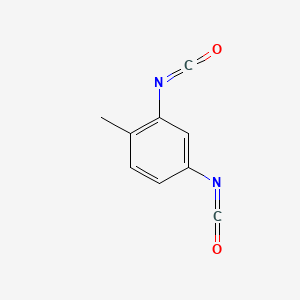
- Chemical Type: Toluene diisocyanate (TDI) prepolymer
- Appearance: Clear to slightly hazy liquid
- NCO Content: 4.4% ± 0.2%
- Viscosity at 23°C: 7,000 ± 1,000 mPa·s
- Monomeric TDI Content: Less than 0.5%
- Supply Form: Solvent-free
- Function: Isocyanate prepolymer / hardener component
Compatibility & Handling
Polyvion ISO-AR 15 shows good compatibility with ester solvents such as ethyl acetate, butyl acetate, and 1-methoxypropylacetate-2, as well as with aromatic hydrocarbon solvents such as toluene, xylene, and comparable aromatic solvent blends. Alcohols should not be used to thin or blend with Polyvion ISO-AR 15, since hydroxyl-functional solvents react directly with the isocyanate groups and consume reactive capacity intended for the resin system.
As with all isocyanate-based prepolymers, Polyvion ISO-AR 15 reacts readily with atmospheric moisture, so mixing equipment, storage containers, and application tools should be kept dry throughout use. Exposure to humidity during storage or application can lead to gas formation (carbon dioxide evolution) and premature viscosity increase in the finished coating batch.
Before committing to full-scale production, most formulators run small trial batches to confirm that a prepolymer’s reactivity profile, pot life, and cure behavior align with their specific hardener package and processing equipment. This is particularly important for two-component systems used in construction settings, where ambient temperature, humidity, and substrate moisture content can all shift the practical working window away from laboratory conditions. Batch-to-batch consistency in NCO content and viscosity reduces the amount of on-site adjustment needed and helps maintain uniform film properties across large application areas such as roofs or floors.
Formulators should also account for the shear and mixing conditions used during production, since inadequate dispersion of fillers or additives can lead to localized variation in cured film performance even when the base prepolymer meets specification. Keeping detailed records of incoming lot data alongside application results supports faster troubleshooting if performance issues arise downstream.
Storage Recommendations
- Store Polyvion ISO-AR 15 in tightly closed original containers at temperatures above 0°C and below 30°C.
- Keep in a cool, dry, well-ventilated area away from direct sunlight and moisture sources.
- Reseal partially used containers promptly after each withdrawal to minimize moisture pickup.
- Recommended shelf life under proper storage conditions: To be confirmed based on the final specification sheet.
Packaging & Transport
- Standard Packaging: Metal drums or smaller sealed metal containers designed to exclude moisture ingress during storage and transport.
- UN Number: To be confirmed based on the final specification sheet.
- Hazard Class: To be confirmed based on the final specification sheet.
- Exact transport documentation and regional classification: To be confirmed based on the final specification sheet.
In crack-bridging concrete coatings, the ability of the cured film to stretch and recover without tearing is directly tied to the flexibility built into the prepolymer backbone, making this an important selection criterion for coatings applied over substrates prone to seasonal or structural movement. In flat roof coatings, resistance to ponding water, UV exposure, and repeated thermal cycling over many years places additional demands on both the prepolymer chemistry and the overall formulation. Selecting a prepolymer with well-characterized NCO content and viscosity, such as Polyvion ISO-AR 15, helps formulators achieve consistent, repeatable results across both application types.
Polyvion ISO-AR 15: Safety & Handling
Polyvion ISO-AR 15 should be handled in accordance with applicable safety procedures for isocyanate-based prepolymers. The product may cause eye irritation, skin sensitization, and respiratory sensitization from vapor or aerosol inhalation, so adequate ventilation and appropriate personal protective equipment are essential during handling, mixing, and application.
Operators should review the Safety Data Sheet before handling Polyvion ISO-AR 15, and should wear chemical-resistant gloves, eye protection, and appropriate respiratory protection when spraying or transferring the product. For related isocyanate hardener chemistries used in similar coating systems, see also Polyvion ISO-M 13 and Polyvion ISO-M 31.