
Perovion DCP PBC-40B is a dicumyl peroxide formulation supplied as a 40% powder on an inert carrier system. Perovion DCP PBC-40B is a monofunctional peroxide used for the cross-linking of natural rubber, synthetic rubber, and thermoplastic polyolefins (TPO). Perovion DCP PBC-40B is widely valued for the excellent scorch safety it provides during compounding, which allows one-step mixing in many rubber formulations.
Perovion DCP PBC-40B Overview
Perovion DCP PBC-40B belongs to the dialkyl peroxide family, based on dicumyl peroxide, one of the most widely used cross-linking peroxides in the rubber and polyolefin industries. Supplying the active peroxide as a 40% powder on an inert carrier improves handling safety and dosing accuracy compared with less diluted forms, while also supporting good dispersion throughout the rubber compound during internal mixing or on an open mill. Compounds containing Perovion DCP PBC-40B typically show a safe processing temperature around 130°C, based on a rheometer scorch time (ts2) greater than 20 minutes, with a typical cross-linking temperature around 170°C.
Key Features
- Excellent scorch safety: Perovion DCP PBC-40B provides a wide processing safety margin, reducing the risk of premature cross-linking during mixing and extrusion, which helps minimize scrap from prematurely cured batches.
- One-step mixing compatibility: Under certain formulation conditions, Perovion DCP PBC-40B allows all compound ingredients to be mixed together in a single step, simplifying the compounding process and potentially reducing overall cycle time on the production line.
- Broad polymer compatibility: Perovion DCP PBC-40B is compatible with natural rubber, EPDM, EPM, silicone rubber, and a range of polyolefin resins used in TPO compounding, giving formulators the flexibility to standardize on a single cross-linking peroxide across product lines.
- Powder-on-carrier form: Supplying the initiator as a 40% powder simplifies dosing, mixing, and handling relative to liquid or neat dicumyl peroxide.
- Predictable cure profile: A typical cross-linking temperature around 170°C, with a rheometer t90 of approximately 12 minutes, gives formulators predictable cure behavior for process planning, supporting consistent press schedules across production runs.
Typical Applications
Perovion DCP PBC-40B is widely used to cross-link natural rubber, EPDM, and EPM compounds in general rubber goods, wire and cable insulation, and molded rubber components where a well-established, cost-effective cross-linking peroxide is required. Its broad, decades-long track record across the global rubber industry makes it a common baseline reference peroxide against which newer cross-linking systems are often compared during formulation development, performance benchmarking, and cost evaluation.
Beyond conventional rubber compounding, Perovion DCP PBC-40B is used in cross-linked polyolefin foam and wire and cable applications, and in TPO formulations that need a monofunctional peroxide with predictable scorch safety and cure behavior across a range of processing conditions. Its powder-on-carrier form also makes it convenient for use in dry-blend compounding processes where consistent particle size supports uniform dispersion throughout the compound.
Formulators typically qualify dosage levels against target cross-link density, mechanical properties such as tensile strength and compression set, and scorch safety at the intended processing temperature. Because cure behavior can be influenced by compound formulation, mixing history, and storage conditions, many processors run rheometer studies before committing a new peroxide grade to full production volume, comparing results against established baseline formulations already qualified on the same line.
Technical Specifications
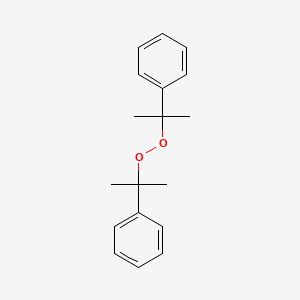
- Chemical Type: Dicumyl peroxide (DCP)
- Appearance: White free-flowing powder
- Active Content: 40%
- Safe Processing Temperature: Approximately 130°C (rheometer ts2 > 20 min)
- Typical Cross-Linking Temperature: Approximately 170°C (rheometer t90 ≈ 12 min)
- Bulk Density: To be confirmed based on the final specification sheet.
- CAS Number: 80-43-3
Thermal Stability
- Organic peroxides are thermally unstable substances and must be handled with appropriate care at all times.
- Self-Accelerating Decomposition Temperature (SADT): To be confirmed based on the final specification sheet.
- Recommended maximum storage temperature: To be confirmed based on the final specification sheet.
As with other powder-on-carrier peroxide products, maintaining product quality between manufacture and use depends on avoiding prolonged exposure to elevated ambient temperature, contamination, and moisture ingress during warehousing and transport.
Storage Recommendations
- Store Perovion DCP PBC-40B in a cool, dry, well-ventilated area away from direct sunlight and other heat sources.
- Keep containers tightly closed when not in use to prevent contamination and moisture ingress.
- Avoid contact with reducing agents, acids, alkalis, and heavy metal compounds, which can trigger premature decomposition.
- Recommended shelf life and maximum storage duration under proper storage conditions: To be confirmed based on the final specification sheet.
Packaging & Transport
- Standard Packaging: Fiber drums or multi-wall bags with inner liner; typical net weights available on request based on customer volume and logistics requirements.
- UN Number: To be confirmed based on the final specification sheet.
- Hazard Class: Organic peroxide, Class 5.2
- Exact transport documentation, packing group, hazard labeling, and regional classification: To be confirmed based on the final specification sheet.
Dicumyl peroxide has a long history of use across the global rubber and polyolefin industries, with decades of accumulated formulation experience supporting its continued role as a standard cross-linking agent. Its well-characterized decomposition behavior and broad polymer compatibility make it a practical starting point for compounders developing new rubber or polyolefin formulations, even as newer specialty peroxides become available for specific niche applications requiring tailored reactivity profiles.
Perovion DCP PBC-40B: Safety & Handling
Perovion DCP PBC-40B should be handled in accordance with applicable safety procedures for organic peroxides. The product is classified as an oxidizing material and requires appropriate storage and handling measures at all times, including avoidance of contact with incompatible materials and heat sources. Operators should avoid generating and inhaling dust during weighing and transfer, and should ensure adequate ventilation wherever Perovion DCP PBC-40B is handled, particularly in enclosed mixing rooms.
Users are advised to review the Safety Data Sheet for Perovion DCP PBC-40B prior to handling and to implement appropriate personal protective equipment and engineering controls as specified therein, including gloves, eye protection, and dust extraction where applicable. Safety Data Sheet and destination-compliant labeling information are available upon request. For related cross-linking peroxides used in similar rubber and polyolefin applications, see also Perovion DBPH P14-45 and Perovion BIBP P14-40.